Selecting perforated flooring Uganda or architectural screens involves more than just choosing a pattern you like. To ensure the material performs correctly for its intended application—whether it's a heavy-duty factory floor, a safe staircase, or a delicate sun screen—you must understand and specify its key technical attributes. Getting the perforated steel specifications right is the difference between a long-lasting, fit-for-purpose solution and a costly failure. This guide demystifies the core specifications—gauge, hole pattern, open area, and coatings—empowering contractors, engineers, and architects in Uganda to make informed procurement decisions.
Core Specification #1: Sheet Thickness (Gauge)
The gauge of the steel refers to its thickness, which directly determines its strength, rigidity, and load-bearing capacity.
- Understanding Gauge Numbers: The gauge system is inverse; a lower gauge number means a thicker sheet. Common gauges for flooring and architectural use range from 8 gauge (very thick/heavy) to 16 gauge (lighter).
- Selection Guide:
- 8-10 Gauge (3-4mm+): For heavy industrial flooring expecting frequent pallet jack traffic, heavy rolling loads, or severe impact. Used in major factory aisles or truck access areas.
- 11-13 Gauge (2-3mm): For standard industrial flooring, mezzanines, and platforms with general foot traffic and occasional light carts. The most common range for general-duty applications.
- 14-16 Gauge (1.5-2mm): For light-duty walkways, architectural screens, sunshades, and decorative panels. Suitable where the primary load is wind pressure or foot traffic only.
- Key Consideration for Uganda: For outdoor applications, a slightly thicker gauge within your load range provides a longer corrosion life, as material loss over decades is less critical.
Core Specification #2: Hole Pattern, Size, and Spacing
This defines the perforation geometry, affecting function, aesthetics, and strength.
- Hole Shape:
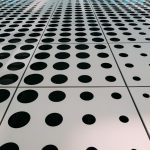
- Round Holes: The most common, cost-effective, and versatile. Used in most industrial flooring and standard screens.
- Square/Slot Holes: Offer a different aesthetic and can provide a slightly higher open area. Slotted holes can be oriented for directional strength or drainage.
- Decorative/Designer Patterns: Hexagons, diamonds, custom logos, etc., used primarily for architectural effect.
- Hole Diameter/Size: Measured in millimeters (mm). Larger holes allow more material (chips, debris) to pass through but reduce the structural strength of the sheet. A balance must be struck.
- Staggered vs. Straight Centers: Refers to the layout of the holes. A staggered pattern (like on a checkerboard) is stronger and more common than a straight line pattern.
- Open Area Percentage: This is a critical calculated value. It is the total area of the holes as a percentage of the total sheet area. A higher open area (e.g., 40-60%) is for maximum drainage/ventilation. A lower open area (e.g., 20-30%) is for stronger floors or screens needing more privacy. Suppliers provide this spec.
Core Specification #3: Material and Protective Coatings
The base metal and its finish determine corrosion resistance, appearance, and suitability for the environment.
- Base Material:
- Mild Steel (Low Carbon Steel): The standard, most economical choice. It must have a protective coating.
- Galvanized Steel: Mild steel that has been hot-dip coated in zinc. This is the standard and recommended finish for most industrial and outdoor perforated flooring Uganda. The zinc provides sacrificial corrosion protection, even if scratched.
- Aluminum: Naturally corrosion-resistant, lightweight, and good for architectural screens or coastal environments. Cannot handle the same loads as steel.
- Stainless Steel (e.g., 304, 316): Excellent corrosion and chemical resistance for harsh environments (food processing, pharmaceuticals, chemical plants). High cost.
- Coatings (Applied over mild or galvanized steel):
- Powder Coating: A dry powder is electrostatically applied and baked on. Provides a durable, colored finish in any RAL color for architectural screens or where color-coding is needed for safety. Enhances corrosion resistance.
- Painted Coatings: Less durable than powder coating but can be done on-site for touch-ups.
Specification Checklist for Your Project
When ordering, provide or confirm these details:
- Material Type: e.g., Hot-Dip Galvanized Steel.
- Sheet Thickness: e.g., 10 Gauge (3.4mm).
- Hole Pattern: e.g., Round Holes, Staggered Centers.
- Hole Diameter: e.g., 10mm.
- Center Distance (Pitch): e.g., 15mm between hole centers.
- Open Area %: (Can be calculated from the above, but confirm).
- Sheet Size: e.g., 1200mm x 2400mm (or as required for your supports).
- Finish (if needed): e.g., Powder Coated RAL 7016 (Anthracite Grey).
- Special Requirements: e.g., Mill finish, deburred edges, tolerance levels.
Partnering with a Knowledgeable Supplier
For projects in Uganda, working with a technical supplier like Precision Flooring Uganda is crucial. We can:
- Advise on Specifications: Recommend the right gauge and pattern for your load and drainage needs.
- Provide Load Tables: Show the maximum span ratings for different gauges and patterns.
- Handle Fabrication: Cut sheets to size, fold edges for safety, and apply the specified coatings.
- Ensure Quality: Supply material with consistent hole patterns, flat sheets, and certified coatings.
Precision in Every Perforation
Perforated steel specifications are the engineering blueprint that ensures your material investment is safe, functional, and durable. Taking the time to understand and correctly specify gauge, pattern, and coating—rather than just choosing by appearance—prevents under-specification (leading to failure) and over-specification (leading to unnecessary cost). It transforms perforated steel from a generic commodity into a precision-engineered component of your project's success.
Need help specifying the right perforated steel? Contact Precision Flooring Uganda with your project details. Our technical team will guide you through the options and provide a detailed quotation for material that meets your exact perforated flooring Uganda performance and aesthetic requirements.
Need Professional Flooring Services?
Get expert flooring solutions tailored to your specific needs. Explore our services or get a free quote today.
Transform Your Space Today
Don't wait to have the beautiful, durable floors you deserve. Our team of experts is ready to bring your vision to life with premium flooring solutions.
Get Your Free Consultation