The Golden Rule: Flat, Clean, Dry, and Stable
One of the most appealing benefits of SPC flooring is its potential for direct installation over many existing floors, a process known as a "floating floor" installation. This can save Ugandan homeowners and businesses considerable time, demolition costs, and mess. However, success depends entirely on the condition and type of the existing floor. This guide provides a detailed, step-by-step overview of what you need to know about Installing SPC Flooring in Uganda over common existing surfaces like ceramic tile, vinyl, laminate, and concrete, ensuring a stable and long-lasting result.
Critical Pre-Installation Assessment
Before purchasing a single plank, you must thoroughly assess your existing floor. Rushing this step is the most common cause of installation failure.
Your existing subfloor must meet these four non-negotiable criteria:
- Flat: The surface must be level within a strict tolerance—typically 3mm deviation over a 1-meter span. Use a long straightedge or level to check for dips and humps.
- Clean: Free of all dust, wax, oil, adhesive residue, and debris. Any loose tiles or floorboards must be firmly re-adhered.
- Dry: Especially critical for concrete slabs. Residual moisture can lead to problems even with waterproof SPC.
- Stable: The existing floor must be firmly attached to the subsurface with no movement, bounce, or squeaks.
Evaluating Common Existing Floor Types in Uganda
| Existing Floor Type | Generally Suitable for SPC? | Key Preparations & Warnings |
|---|---|---|
| Ceramic/Porcelain Tile | YES, often ideal. | Grout lines must be filled if deeper than 2mm. Ensure all tiles are firmly bonded. The hard, flat surface is excellent. |
| Vinyl Sheet or Tile (Firmly adhered) | YES. | Must be fully glued down, not floating. Remove any wax or polish. Check for soft spots. |
| Laminate or Engineered Wood (Floating) | NO. | Never install a floating floor over another floating floor. It creates instability and violates warranties. Must be removed. |
| Concrete Slab | YES, the standard subfloor. | Must be checked for moisture (see below) and leveled if needed. Cracks should be filled. |
| Wooden Floorboards | CAUTION. | Must be securely nailed/screwed down to eliminate flex. Overlay with plywood is often recommended for a perfect surface. |
Step-by-Step Preparation Guide
Proper preparation is 90% of a successful installation. Follow these steps meticulously.
Step 1: Moisture Testing for Concrete Slabs
This is essential if installing over concrete, whether it's bare or under tiles.
- Polyethylene Sheet Test (Simple): Tape a 1m x 1m plastic sheet securely to the concrete. Check after 24-48 hours. Condensation or darkening under the plastic indicates high moisture emission, requiring a moisture barrier.
- Professional Moisture Meter: For certainty, a flooring professional can use a hygrometer to get a precise reading. Levels should be within the SPC manufacturer's specifications.
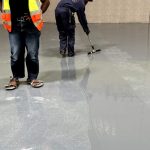
Step 2: Leveling and Filling
An uneven surface will cause SPC planks to rock, stress the locks, and create a spongy feel.
- For Shallow Dips/Grout Lines: Use a floor leveling compound. For tile grout, a product like Henry 547 is suitable to create a smooth, continuous surface.
- For Significant Unevenness: Self-leveling underlayment (SLU) may be required. This is a pourous product that finds its own level to create a perfectly flat surface.
Step 3: Deep Cleaning
The surface must be immaculate to ensure the underlayment adheres properly and no debris causes bumps.
- Vacuum and sweep thoroughly.
- Mop with a degreaser if needed to remove any wax or oily residues from old vinyl.
- Allow the floor to dry completely before proceeding.
The Installation Process: Tools and Technique
Once preparation is complete, you can begin the physical installation.
Required Tools & Materials
- SPC Planks: Acclimatize in the room for 24-48 hours before installation.
- Appropriate Underlayment: For installations over hard surfaces like tile or concrete, a thin foam underlayment (1-2mm) is typically used for sound dampening and minor smoothing. Do not use a thick, compressible underlayment as it will make the rigid SPC unstable.
- Installation Kit: Spacers, tapping block, pull bar, rubber mallet.
- Cutting Tools: A sharp utility knife, or preferably a jigsaw/fine-tooth handsaw for cleaner cuts.
Laying the Floor: Key Techniques
- Lay Underlayment: Roll out the underlayment sheets, butt seams together (do not overlap), and tape them securely.
- Plan Your Layout: Start parallel to the main light source or the longest wall. Plan to stagger end joints by at least 8 inches.
- Maintain Expansion Gaps: Use spacers to maintain a 10-15mm gap around all walls, cabinets, and door frames. This is critical to allow for thermal expansion.
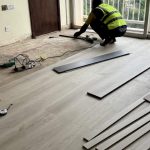
- Click and Lock: Angle the plank and engage the long-side tongue-and-groove, then lower it to click. Use the tapping block against the short end to close seams—never strike the plank directly.
- Final Row: Measure and rip-cut the final row of planks to width, ensuring the expansion gap remains.
Special Considerations for Ugandan Homes
- Humidity: Even though SPC is waterproof, the ambient humidity during installation matters. Avoid installing during or immediately after extreme rainy weather if the house is very damp.
- Temperature: Install in room temperatures consistent with normal living conditions (ideally between 18°C - 27°C).
- Transition Strips: In doorways to other flooring types, use appropriate transition moldings (T-mold, reducer) to bridge height differences and protect edges.
When to Call a Professional Installer
While DIY is possible, hire a professional like Precision Flooring Uganda for:
- Significant subfloor leveling requiring self-leveling compounds.
- Moisture mitigation on concrete slabs.
- Complex layouts with many corners, angles, or obstacles.
- Guaranteeing the manufacturer's warranty, which often requires professional installation.
Conclusion: A Feasible and Efficient Upgrade
Installing SPC flooring over a suitable existing floor is not only possible but is a highly efficient way to transform a space in Uganda. The key to success lies in rigorous preparation—ensuring the old floor is impeccably flat, clean, and stable. By following this guide, you can save on demolition costs and enjoy the modern, durable benefits of SPC flooring with minimal disruption.(Installing SPC Flooring in Uganda)
Need a professional assessment of your existing floor? Contact Precision Flooring Uganda. Our experts can evaluate your subfloor, handle all necessary preparations, and provide a flawless installation of your new SPC floor, complete with full warranty protection.
Need Professional Flooring Services?
Get expert flooring solutions tailored to your specific needs. Explore our services or get a free quote today.
Transform Your Space Today
Don't wait to have the beautiful, durable floors you deserve. Our team of experts is ready to bring your vision to life with premium flooring solutions.
Get Your Free Consultation